Publisher's Synopsis
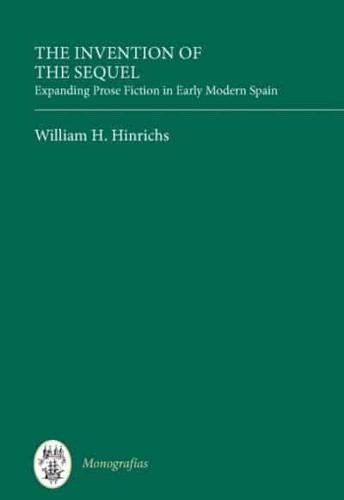
This book proposes a new way of tracing the history of the Early Modern Spanish novel through the prism of literary continuation. It identifies and examines the Golden Age narratives that invented the sequel and the narrative genres that the sequel in turn invented. This book proposes a new way of tracing the history of the Early Modern Spanish novel through the prism of literary continuation. It identifies and examines the Golden Age narratives that invented the sequel and the narrative genres that the sequel in turn invented. The author explores the rivalries between apocryphal and authorized sequelists that forged modern notions of authorship and authorial property. The book also defines the sequel's forms and functions, filling a major gap in literary theory in general and Peninsular literary studies in particular. Notably, the author demonstrates that the sequel develops first and foremost in Early Modern Spain, an unacknowledged and unexamined contribution to Western letters. With its panoramic scope, this study serves as an introduction to the central novelistic genres and texts of Early Modern Spain. From this foundational starting point, it alsooffers a general framework for understanding imaginative expansion in subsequent time periods and literary traditions. William H. Hinrichs is a founding faculty member and Assistant Professor of Modern Languages at Bard High School Early College, Queens.